


Motorcycle Chain Maintenance: The Basics That Could Save You Hundreds

Motorcycle chain maintenance is one of the simplest jobs you can do at home, yet neglected chains are something we see in workshops all the time. A few minutes of basic maintenance could be the difference between getting thousands more miles from your chain and sprockets — or replacing them far sooner than necessary.
There are also a surprising number of myths surrounding motorcycle chains: how tight should they be? Do chains really “stretch”? Where should you actually spray chain lube? And is covering the entire chain in sticky white grease really helping?
In my latest Get Ben Riding video, I use a Honda CBR650R to go right back to basics and explain motorcycle chain maintenance for riders who perhaps haven't worked on their own bikes before.
First: is your chain actually worn?
Before reaching for the chain cleaner or spanners, you need to understand what you're looking at.
Using the CBR650R, I demonstrate how to check chain slack against the manufacturer's specification, how to work your way around the chain looking for tight spots and kinked links, and what a worn rear sprocket actually looks like.
It's worth learning. A poorly maintained chain can cause vibration, affect gear changes and accelerate sprocket wear — and in extreme cases a failed chain can cause considerably more expensive damage.
And the difference in lifespan can be enormous. In the video I talk about seeing well-maintained chain and sprocket sets exceed 15,000–20,000 miles, while neglected examples can be finished in only a few thousand.
Do motorcycle chains really stretch?
This is where things get interesting.
We commonly talk about a chain having "stretched", but there's more going on inside a modern sealed motorcycle chain than simply a piece of metal becoming longer.
I take a look at O-ring, X-ring and Z-ring chains, what those little seals are actually doing and why keeping dirt away from them is so important to the life of the chain.
Understanding that also changes the way you think about where you're putting your chain lubricant.
Clean it, lube it – but do it properly
The second half of the video is completely hands-on.
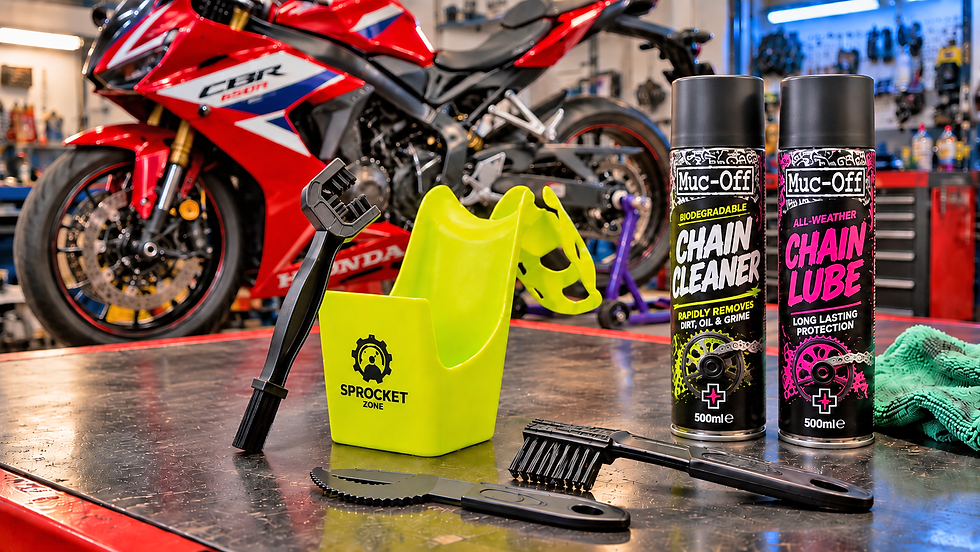
I go through cleaning the chain safely, the products and brushes you'll need and why grabbing whatever solvent happens to be lying around the garage isn't necessarily a good idea.
I also try the brilliantly simple Sprocket Zone tool I was given, designed to catch the horrible black cocktail of old lubricant, cleaner and road grime that would otherwise end up all over your driveway. It costs very little, and after actually using one, I rate it.
Finally, I demonstrate how I lubricate the chain and explain why simply coating the visible outside faces in chain lube isn't really what we're trying to achieve.
Watch the complete beginner's guide
If you're new to motorcycling, have recently bought your first bike, or you've always sprayed some chain lube in roughly the right direction and hoped for the best, this video is for you.
🎥 Watch: Motorcycle Chain Maintenance – A Complete Beginner's Guide
It's basic maintenance, but doing the basics properly can save you money, keep the bike riding better and help you spot a deteriorating chain before it becomes a much bigger problem.
And one final rule from the video that's worth repeating here: never clean or lubricate a chain with the motorcycle running in gear. Turn the engine off and rotate the rear wheel by hand.

Comments