


The Data Behind Motorcycle Fatalities

The Statistics They're Not Talking About. The Licence Changes We May Not Need.
The Narrative
"Motorcyclists make up just 1% of road users but account for 21% of fatalities per year in the UK" - DFT**.
There has never been such a thing as safe motorcycling, nor has the industry ever attempted to pretend otherwise. From the earliest motorcycles that rumbled uncertainly along Britain's roads to today's electronically sophisticated superbikes capable of outperforming supercars, riding on two wheels has always demanded a degree of personal responsibility that simply does not exist behind the wheel of a car. Every rider understands the unspoken contract they enter into the moment they fasten a helmet. The experience is richer because it is more exposed, more involving because it demands greater concentration and, inevitably, less forgiving when events take an unexpected turn.
That understanding has never discouraged people from riding. Quite the opposite. For generations, motorcycles have represented freedom, practicality and, for many, an escape from the increasingly sanitised experience of modern motoring. Commuters have relied upon them to beat congestion, enthusiasts have embraced them for the exhilaration they provide, while others simply appreciate them as one of the most efficient and economical ways of travelling. Yet despite their enduring appeal, motorcycling now finds itself under renewed scrutiny as rising casualty figures once again dominate headlines and political discussion.
Vehicle Type | Year | Fatalities | Serious Injuries | Minor Injuries | No. Vehicles On Road |
Motorcycles | 2025 | 386 | 5,710 | 9,351 | 1.32 Million |
Motorcycles | 2024 | 340 | 5,648 | 10,152 | 1.33 Million |
Motorcycles | 2023 | 315 | 5,356 | 11,307 | 1.35 Million |
Motorcycles | 2022 | 350 | 5,475 | 11,118 | 1.36 Million |
Car, LCV, HGV | 2025 | 689 | 9,932 | 66,090 | 39.88 Million |
Car, LCV, HGV | 2024 | 750 | 9,675 | 69,014 | 39.32 Million |
Car, LCV, HGV | 2023 | 768 | 9,809 | 69,417 | 38.81 Million |
Car, LCV, HGV | 2022 | 849 | 10,264 | 72,451 | 38.26 Million |
Stats provided by DFT 2026 | |||||
The statistic most frequently quoted is both striking and, on the face of it, deeply concerning. Motorcyclists, it is claimed, account for less than one per cent of road users, yet represent more than one fifth of all road fatalities in the United Kingdom. Presented in isolation, the implication appears almost inescapable. If such a small proportion of road users are suffering such a large proportion of deaths, then something within motorcycling itself must surely be failing. It is an argument that has rapidly gathered momentum and one increasingly being used to support calls for more stringent licensing requirements, fundamental reform of the Compulsory Basic Training scheme and tighter regulation surrounding access to powered two-wheelers.
It is an understandable conclusion, but understanding and correctness are not necessarily the same thing.
The Stats Do Not Tell The Whole Story
Statistics possess an unusual ability to simplify extraordinarily complex subjects into figures that appear absolute. They offer certainty in situations where the underlying causes are often anything but certain. The danger lies not in the numbers themselves, but in the conclusions drawn from them. A statistic can accurately describe an outcome while simultaneously revealing very little about the circumstances that produced it. In road safety, perhaps more than any other field, that distinction is critical. Knowing who died is only the beginning of the conversation; understanding why they died is where meaningful policy should begin.
There is no serious argument to be made that motorcycles are as safe as cars. They are not, and nobody within the motorcycling community genuinely believes otherwise. The vulnerability of riding on two wheels is self-evident and accepted by everyone who chooses to do it. Yet acknowledging that vulnerability should not discourage us from examining the figures more critically. The current debate has become increasingly focused upon rider training and licensing, as though the disproportionate fatality rate automatically demonstrates a disproportionate failure of rider competence. That assumption deserves rather more scrutiny than it has so far received.
Modern passenger vehicles have evolved into remarkably effective survival capsules. Advances in structural engineering, restraint systems and electronic safety technology have transformed the survivability of collisions that, only a generation ago, would have proved fatal. Reinforced passenger cells, multiple airbags, crumple zones, autonomous emergency braking and sophisticated stability systems exist for a singular purpose: to reduce the consequences of human error. Motorcycles, despite enormous advances in braking performance, traction control and electronic rider aids, remain fundamentally different. They can assist a rider in avoiding an accident, but once a collision becomes unavoidable they offer virtually no passive protection whatsoever. The rider is not enclosed within a carefully engineered safety structure; they are exposed to the full violence of the impact itself.
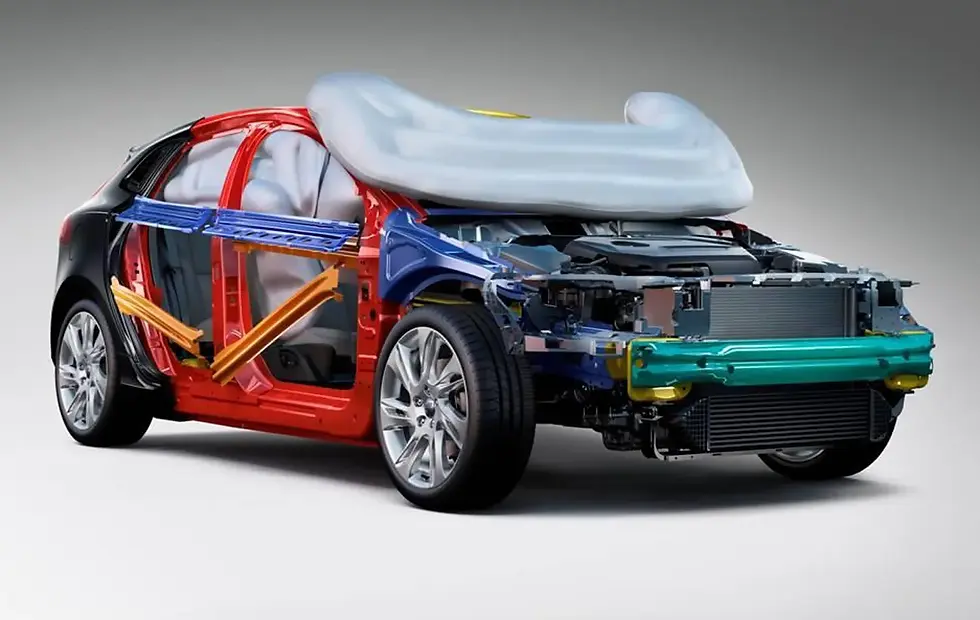
This distinction matters because it fundamentally alters the way casualty statistics should be interpreted. Consider a relatively modest collision involving a family hatchback striking the rear of a commercial vehicle at thirty miles per hour. Such an incident may result in deployed airbags, significant vehicle damage and, more often than not, occupants walking away with comparatively minor injuries. Replace that hatchback with a motorcycle travelling at the same speed under identical circumstances and the outcome changes dramatically, not necessarily because the rider made a poorer decision, nor because they lacked training, but because the laws of physics afford them none of the protection enjoyed by the occupants of four wheels.
A collision itself may be identical car/bike; the consequences are not.
This is perhaps the most significant factor absent from much of the current public discourse. Fatality statistics are increasingly presented as evidence that motorcycles are inherently unsafe because riders are insufficiently trained, yet the figures alone cannot support such a conclusion. They demonstrate only that motorcyclists are significantly more likely to die when involved in serious collisions. Those are two very different propositions. Training can undoubtedly reduce the likelihood of an accident occurring, but it cannot eliminate distraction, fatigue, mechanical failure, poor infrastructure or the mistakes of other road users. Most importantly, it cannot change what happens once a rider's body becomes the first point of impact.
It is equally important to distinguish between the causes of collisions and the severity of their outcomes. These are often treated as though they are interchangeable when, in reality, they represent entirely different problems requiring entirely different solutions. If the majority of motorcycle fatalities are ultimately the consequence of poor rider training, then reforming the licensing system becomes an obvious and evidence-based response. If, however, the principal causes lie elsewhere — within the behaviour of other road users, the nature of Britain's road network, the unique vulnerability of motorcycles or factors beyond the rider's control — then focusing exclusively upon licensing risks addressing only the most visible symptom rather than the underlying disease.

The purpose of this article is not to argue against improving motorcycle training. There is undoubtedly room for reform, just as there is within almost every aspect of road safety. Nor is it an attempt to diminish the tragedy represented by every fatal collision. Rather, it seeks to examine whether the current narrative surrounding motorcycle casualties reflects the evidence in its entirety or whether, in the understandable desire to reduce fatalities, a far more complicated issue has been reduced to a single, politically convenient conclusion. Because once the headline figures are set aside and the data examined in greater detail, a rather different picture begins to emerge—one that raises uncomfortable questions not only about motorcycle licensing, but about the way road safety itself is understood.
When Statistics Become a Narrative
Statistics occupy a curious position within public debate. They possess an authority that is rarely questioned, yet the stories they tell are often determined as much by what has been omitted as by what has been included. This is particularly true in road safety, where a single headline figure can rapidly become accepted wisdom despite representing only one small part of a considerably more complex picture.
The current discussion surrounding motorcycle casualties has become almost entirely defined by a single comparison. Motorcyclists represent only a tiny proportion of Britain's road users yet account for more than one fifth of all road fatalities. It is a figure repeated so frequently that it has almost become accepted as evidence in itself, a statistical shorthand for the argument that motorcycles are disproportionately dangerous and, by implication, that the existing licensing system is no longer fit for purpose.
Vehicle Type | Year | Fatalities | No. Vehicles On Road | % Of Road Users | % Of Fatalities |
Motorcycles | 2025 | 386 | 1.32 Million | 2.3%** | 35% |
Cars, LCV, HGV | 2025 | 689 | 56.06 Million | 97.6% | 64% |
Totals: | 1,075 | 57.38 Million |
The numbers themselves are not in dispute. In 2025, 386 motorcyclists lost their lives on Britain's roads. During the same period, 689 occupants of cars, vans and heavy goods vehicles were killed. Viewed in isolation, those figures appear extraordinary when considered alongside the vastly different numbers of vehicles using the road network. There are almost forty million registered cars, vans and trucks in the United Kingdom compared with little more than 1.3 million motorcycles. On the surface, the conclusion seems unavoidable.
Yet road safety has never been a discipline in which surface-level conclusions have served anyone particularly well.
The difficulty lies in assuming that disproportionate outcomes must inevitably share disproportionate causes. They often do not. A statistic describing who died tells us remarkably little about why the collision occurred, who was responsible for it, whether it could realistically have been prevented through additional training or whether the outcome was ultimately dictated by factors entirely beyond the rider's control.
The distinction becomes increasingly important once the casualty data begins to reveal its finer detail.
One of the most revealing figures is seldom mentioned within the wider discussion. In 2025, approximately three quarters of all fatal motorcycle collisions involved another vehicle. This is not an insignificant observation. It suggests that the majority of fatal motorcycle crashes are not isolated incidents in which riders simply lose control without external influence. They occur within the same shared traffic environment as every other road user, where decisions made by one individual frequently determine the consequences for another. That fact alone does not apportion blame, but it does challenge the assumption that every meaningful solution must begin and end with the motorcyclist.
Location Matters:
Year | Fatalities | Rural | Urban | Motorway |
2025 | 386 | 270 (69%) | 104 | 12 |
2024 | 340 | 235 (69%) | 95 | 10 |
2023 | 315 | 211 (66%) | 95 | 9 |
2022 | 350 | 231 (66%) | 108 | 11 |
Location tells an equally interesting story. Nearly seventy per cent of motorcycle fatalities occur on rural roads, with comparatively few taking place on motorways. This immediately begins to undermine several commonly held assumptions surrounding rider risk. Rural roads present a unique combination of hazards: higher speed limits, limited visibility, unpredictable junctions, agricultural traffic, poor road surfaces and significantly reduced opportunities for recovery when something goes wrong. They also represent the environment most commonly used by experienced leisure riders rather than novice commuters or commercial delivery riders. The roads themselves therefore become an important part of the conversation, yet they rarely feature prominently within discussions centred almost exclusively upon licensing reform.
Motorways provide an equally useful comparison. Despite carrying enormous volumes of traffic at higher average speeds, they remain statistically among Britain's safest roads when measured per mile travelled. Learner motorcyclists riding under Compulsory Basic Training are prohibited from using them entirely. Instead, they spend their formative riding years navigating dense urban traffic, complex junctions and congested A-roads where the overwhelming majority of interactions with other vehicles occur. It is an unintended consequence of the licensing system that novice riders are excluded from one of the safest road environments available while accumulating their experience almost exclusively within some of the most demanding.

Are Big Bikes The Issue?
Engine capacity introduces another variable that deserves closer examination. Current estimates suggest that almost seventy per cent of fatal motorcycle collisions involve machines exceeding 500cc, while motorcycles that may legally be ridden under a CBT account for a comparatively small proportion of fatalities. That observation should not be interpreted as evidence that Compulsory Basic Training requires no reform; such a conclusion would be as simplistic as those this article seeks to challenge. It does, however, raise a legitimate question regarding proportionality. If the overwhelming majority of fatal collisions occur on motorcycles that novice riders cannot legally access, then it becomes difficult to argue that changes to CBT alone are likely to produce the dramatic reductions in fatalities that some have suggested.
Capacity (cc) | Fatalities |
125 < | 18-22% |
125 - 500 (A2) | 10-12% |
500 > | 60-70% |
Is Age A Factor?
Age demographics present another equally nuanced picture. The average age of British motorcyclists has increased steadily for many years, with the industry now facing an ageing customer base and declining numbers of younger entrants. Yet younger riders remain disproportionately represented within casualty statistics. This should surprise nobody. Similar patterns exist across almost every category of road user and have long been associated with inexperience, greater exposure to risk and behavioural factors extending far beyond the mechanics of vehicle control. Once again, the issue proves considerably more complicated than simply attributing outcomes to shortcomings within the licensing process.
Age | Fatalities |
16 < | 4% |
17 - 29 | 35% |
30 - 49 | 30% |
50-69 | 25% |
70+ | 4-5% |
Perhaps the greatest danger in relying upon a single statistic is that it encourages policymakers to search for a single solution. Human behaviour, however, has never been that accommodating. Motorcyclists occupy a uniquely vulnerable position within an increasingly congested transport system. Their safety is influenced not only by their own decisions but by the behaviour of every driver sharing the road with them, the quality of the infrastructure beneath them and the physical limitations imposed by the vehicle itself. Unlike occupants of modern cars, riders remain exposed to hazards that many motorists scarcely notice. Diesel spills, loose gravel, sunken drain covers, deteriorating road surfaces and painted road markings represent little more than minor inconveniences to four wheels but can become critical hazards to two. None of these factors appear within the headline statistic, yet every one contributes to the level of risk riders accept each time they leave home.
This broader context is important because it fundamentally changes the nature of the debate. If the objective is simply to reduce the number of motorcycle fatalities, then every contributing factor deserves examination in proportion to its influence. Licensing undoubtedly forms part of that discussion, but so too should road engineering, driver education, vehicle visibility, infrastructure maintenance and public awareness of how motorcycles interact with other traffic. Focusing exclusively upon one element risks overlooking a multitude of others, many of which may exert a far greater influence over whether a rider returns home safely.

The temptation in public policy is often to favour solutions that are measurable. Altering a licensing system can be announced, legislated and quantified. Changing driver attitudes, improving observation, addressing deteriorating road surfaces or encouraging greater respect between different classes of road user are considerably more difficult objectives to achieve. They are also considerably harder to measure. Difficulty, however, should never be mistaken for irrelevance. If the available evidence demonstrates that motorcycle safety is influenced by a broad combination of environmental, behavioural and mechanical factors, then any strategy that concentrates predominantly upon licensing alone risks confusing what is easiest to change with what is most likely to save lives.
The Vulnerability Gap
Road safety policy has traditionally concentrated upon preventing collisions, yet comparatively little attention is paid to what happens once prevention has failed. This distinction is particularly important when discussing motorcycles because, unlike almost every other class of motor vehicle, the severity of a rider's injuries is dictated as much by vulnerability as it is by the collision itself. It is a reality so fundamental to motorcycling that it is often overlooked altogether. Riders do not simply travel differently; they crash differently, and the consequences of those crashes bear little resemblance to those experienced by occupants of four-wheeled vehicles.
Modern cars have undergone a remarkable transformation over the past three decades. Manufacturers now devote extraordinary levels of engineering resource to occupant protection, designing vehicles that not only avoid collisions but, when avoidance proves impossible, actively manage the forces involved. Reinforced passenger cells, carefully engineered crumple zones, multiple airbags, side impact protection, active head restraints and sophisticated electronic intervention systems have fundamentally altered the survivability of road traffic collisions. A modern family hatchback is no longer simply a means of transport; it is an exceptionally effective safety cell designed to absorb violence before it reaches those inside.
Motorcycles have evolved just as dramatically, albeit in a very different direction. Anti-lock braking systems, lean-sensitive traction control, cornering ABS, wheelie control, radar-assisted cruise control and blind spot detection all represent significant advances in accident avoidance, but they share one important characteristic. Every one of them is designed to prevent a collision from occurring. Once the collision has become inevitable, the motorcycle has very little left to offer.

This is not a criticism of motorcycle design; it is simply the unavoidable consequence of physics. A motorcycle cannot incorporate substantial crumple zones without becoming unusable. It cannot surround its rider with reinforced structures without ceasing to be a motorcycle altogether. The very characteristics that make motorcycles appealing — their light weight, agility and openness — inevitably remove many of the protections available to occupants of other vehicles.
It follows, therefore, that two broadly comparable collisions may produce entirely different outcomes depending not upon the decisions that preceded them, but upon the vehicle involved. A rear-end collision at urban speeds that might result in little more than damaged bodywork and deployed airbags for a car driver may leave a motorcyclist with catastrophic injuries. The error preceding the impact may be identical. The consequences rarely are.
This distinction rarely receives the prominence it deserves within public debate because casualty statistics naturally record outcomes rather than survivability. A fatality is recorded regardless of whether the collision was fundamentally unsurvivable or could reasonably have been avoided through different rider behaviour. Consequently, there is a tendency to interpret disproportionate fatality rates as evidence of disproportionate rider error when, in reality, a significant proportion of that disparity is simply the inevitable consequence of travelling without the protection afforded to occupants of modern vehicles.
The vulnerability of motorcyclists extends well beyond collisions themselves. Riders occupy a unique position within the transport system because they are affected by hazards that many motorists scarcely notice. A diesel spill on the exit of a roundabout may pass entirely unnoticed beneath four tyres while proving sufficient to remove both wheels from beneath a motorcycle in an instant. Loose gravel deposited by agricultural traffic, polished thermoplastic road markings, sunken ironwork, uneven repairs and deteriorating road surfaces all present risks that are disproportionately severe for riders despite posing relatively little danger to most other vehicles. These hazards rarely feature within discussions surrounding casualty reduction, yet collectively they represent an ever-present part of everyday motorcycling.

Perhaps more significantly still, motorcyclists remain uniquely dependent upon the observational standards of everyone around them. Few collisions involving motorcycles occur in complete isolation. Every rider quickly develops an awareness that survival depends not only upon anticipating their own mistakes, but upon anticipating those of others. Defensive riding is not simply encouraged within advanced motorcycle training; it is regarded as an essential skill precisely because riders cannot assume they have been seen.
The phenomenon commonly referred to within motorcycling as SMIDSY — "Sorry Mate, I Didn't See You" — has become something of an unfortunate cliché, yet its persistence reflects a genuine issue. Motorcycles present a comparatively small visual profile, accelerate differently from other traffic and are more difficult for drivers to judge accurately, particularly at junctions. These are not excuses for poor observation; they are well-established characteristics of motorcycle visibility that demand a greater level of awareness from all road users, not solely those travelling on two wheels.
This raises an uncomfortable question within the current debate surrounding licensing reform. If the majority of fatal motorcycle collisions involve another vehicle, to what extent should casualty reduction strategies concentrate upon educating motorists rather than exclusively scrutinising riders? Driver training has traditionally devoted relatively little time to understanding how motorcycles behave within traffic. Concepts familiar to riders, such as filtering, lane positioning, counter-steering or the reasons motorcycles may deliberately occupy unusual road positions, remain poorly understood by many car drivers despite being entirely lawful and often essential to rider safety. Filtering, for example, is frequently perceived as queue-jumping despite long being recognised within UK road traffic law as a legitimate manoeuvre when carried out safely. Misunderstandings of this nature may appear trivial until they influence the split-second decisions made in congested traffic.
Year | Fatalities | Involving 1+ Vehicles | % |
2025 | 386 | 297 | 76% |
2024 | 340 | 262 | 77% |
2023 | 315 | 242 | 76% |
2022 | 350 | 270 | 77% |
The available evidence suggests a more complicated reality. Motorcycle safety exists within an interconnected system in which infrastructure, engineering, public awareness, vehicle design and driver behaviour all exert significant influence. Improving rider training is undoubtedly worthwhile and should remain an important objective, but it would be optimistic to believe that training alone can compensate for deteriorating road surfaces, eliminate driver distraction, overcome failures of observation or alter the physical consequences of an unprotected human body meeting a stationary object. A licensing system, however well designed, cannot repeal the laws of physics, nor can it prevent every lapse in concentration by the millions of motorists with whom riders share the road.
If the ambition is genuinely to reduce motorcycle fatalities rather than simply respond to them, the conversation must inevitably become broader. The challenge is not merely to produce better motorcyclists; it is to create a road environment in which the unique vulnerabilities of motorcyclists are better understood by everyone who uses it.

When Good Intentions Produce Unintended Consequences
The debate surrounding motorcycle licensing often begins with a simple premise: if obtaining a licence were more demanding, riders would be better prepared and casualty figures would inevitably fall. It is an argument that carries an undeniable logic and one that few would dismiss without careful consideration. Better training should, in principle, produce better riders. Yet history has a habit of reminding us that policy rarely exists in isolation. Every legislative change, however well intentioned, produces consequences beyond those it was originally designed to address. Motorcycle licensing in the United Kingdom provides a particularly compelling example.
Few aspects of British transport legislation have become as complex, or as poorly understood by the general public, as the route to obtaining a full motorcycle licence. What was once a comparatively straightforward process has gradually evolved into a tiered structure of age restrictions, power limitations, compulsory training, practical modules and progressive access that even experienced riders occasionally struggle to explain accurately. The introduction of Compulsory Basic Training in 1990 represented a significant philosophical shift, recognising that novice riders required structured instruction before venturing onto public roads. Few would argue with that principle. Subsequent reforms, however, steadily increased both the complexity and cost of progressing beyond those initial stages.
Did you know?
1997–2013 (the "33bhp era")
If you were under 21:
You learned on a 125cc.
You passed one practical motorcycle test (there was no Mod 1/Mod 2 until 2009).
After passing, you could ride any motorcycle, provided it was restricted to 25kW (33bhp) for two years.
After those two years, the restriction automatically expired and you could ride any size/power motorcycle
Today's prospective rider is faced with a sequence of qualifications that bears little resemblance to the relatively accessible system of previous generations. Depending upon age, they may progress through A1, A2 and Category A licences, each governed by its own power restrictions, minimum age requirements and practical examinations. They must successfully complete Module One, testing machine control within an off-road environment, before becoming eligible for Module Two on public roads. Along the way, repeated Compulsory Basic Training certificates may be required simply to maintain the ability to ride legally while experience is accumulated.
There are entirely reasonable arguments supporting many aspects of this framework. Structured training undoubtedly develops machine control, hazard perception and roadcraft more effectively than informal learning alone. The issue is not whether modern riders receive better tuition than their predecessors; in many respects they almost certainly do. The more interesting question is whether increasing complexity has created barriers whose unintended consequences now extend far beyond rider training itself.
Motorcycling has always relied upon attracting young people. Every generation of experienced riders was, at some point, a teenager discovering the independence that only two wheels could provide. The industry flourished because entry was comparatively straightforward, motorcycles were affordable and progression happened naturally as both confidence and income increased. That pipeline is no longer flowing as it once did.
The average age of Britain's motorcyclists now sits in the mid-fifties, a figure that would have seemed almost inconceivable only a few decades ago. The implications of that statistic extend far beyond demographics. An ageing riding population inevitably purchases fewer learner motorcycles, produces fewer lifelong enthusiasts and gradually reduces the customer base upon which manufacturers, dealerships and training schools all depend. Motorcycling is not merely competing against alternative forms of transport; it is competing against a regulatory framework that many prospective riders perceive as unnecessarily complicated before they have even sat on a motorcycle.
Cost compounds that problem still further. Obtaining a full motorcycle licence today frequently requires several days of professional tuition, motorcycle hire, protective equipment, theory tests and two separate practical examinations. Depending upon previous experience and the number of attempts required, the total cost can comfortably exceed £1,000 before the rider has purchased their first motorcycle or arranged insurance. For many young adults already facing rising housing costs, university debt and increasing insurance premiums, motorcycling begins to appear less like an accessible means of transport and more like an expensive hobby with an unusually high administrative burden.
It is perhaps unsurprising, therefore, that many riders choose to remain on a 125cc motorcycle under repeated Compulsory Basic Training certificates rather than progress further. This phenomenon has itself become the focus of criticism, with repeat CBT often portrayed as evidence that the system is failing to encourage riders towards full licences. Yet such criticism overlooks an uncomfortable possibility. If increasing numbers of riders choose not to progress, the problem may not necessarily lie with their willingness to undertake further training. It may equally reflect the cost, complexity and practical obstacles involved in doing so.

This distinction becomes particularly relevant when viewed alongside casualty data. Current estimates suggest that the overwhelming majority of fatal motorcycle collisions involve machines exceeding 500cc rather than learner-legal motorcycles. That observation should not be interpreted as evidence that larger motorcycles are inherently dangerous, nor that novice riders are somehow safer than experienced ones. It does, however, invite a more nuanced discussion regarding where policy interventions are likely to achieve the greatest benefit. If those riders already progressing through the licensing system continue to account for the majority of fatalities, it becomes increasingly difficult to argue that simply encouraging more people to obtain full licences will, in isolation, transform casualty figures.
The commercial implications are equally significant. Britain's motorcycle industry has endured a succession of difficult years characterised by rising operating costs, declining registrations and increasing pressure upon independent dealerships. Manufacturers continue to invest heavily in new technology, cleaner engines and alternative powertrains, yet every new model ultimately depends upon attracting new customers. An industry whose average consumer is approaching retirement age inevitably faces challenges that no amount of product development alone can resolve. Every rider who never enters motorcycling represents not merely the loss of a single motorcycle sale, but potentially decades of future engagement with manufacturers, retailers, training organisations, clothing suppliers and the broader riding community.
Age of rider (2026) | % of riders on the road (2026) |
20 < | 0.01% |
20 - 39 | 10% |
40 - 59 | 42% |
Aged 60 and over | 48% |
Data according to insurance database/MAG Group 2026 | |
This gradual contraction is rarely discussed alongside licensing reform, despite the two being closely connected. Regulation designed to improve safety may simultaneously reduce participation, and a shrinking riding population inevitably alters the economics of the industry itself. Training schools require students. Dealerships require new riders progressing through increasingly larger motorcycles. Manufacturers require first-time customers who will eventually become repeat customers. Remove sufficient numbers from the beginning of that journey and the consequences are felt throughout the entire sector.
None of this should be interpreted as an argument for returning to the licensing systems of previous decades. Motorcycles have become faster, heavier and considerably more capable than those ridden by earlier generations. Society quite rightly expects high standards of competence from anyone using public roads. Equally, there is little merit in romanticising a period when road casualty figures across all categories were substantially higher than they are today. The objective should never be to make obtaining a motorcycle licence easier simply for its own sake.
The more difficult challenge lies in ensuring that regulation remains proportionate to the problem it seeks to solve. Complexity should only exist where complexity demonstrably delivers better outcomes. Additional cost should only be imposed where clear evidence exists that the benefits justify the burden placed upon future riders. Every new requirement inevitably discourages somebody from entering motorcycling altogether. That may be an acceptable trade-off if it produces significant improvements in public safety. It becomes far harder to justify if the evidence suggests that the principal causes of motorcycle fatalities lie elsewhere.
Perhaps the greatest irony is that the United Kingdom has succeeded in producing some of the most comprehensively trained motorcyclists in Europe while simultaneously presiding over an ageing riding population and an industry increasingly concerned about its own long-term sustainability. Whether those two developments are connected remains open to debate. They are, however, occurring at precisely the same time, and any meaningful discussion about the future of motorcycling should be prepared to examine both with equal honesty.
Looking Beyond the Licence
Every death on Britain's roads represents a personal tragedy, regardless of the vehicle involved and this shouldn't be forgotten.
Behind every statistic sits a family whose lives have been altered forever, and any discussion surrounding casualty reduction should begin from that simple reality. If changes to rider training, licensing or legislation can genuinely save lives, then they deserve serious consideration. The question has never been whether reform should take place, but whether the reforms currently being proposed address the factors most responsible for the problem they seek to solve.
Throughout this discussion, one theme has emerged repeatedly. Motorcycle fatalities are undoubtedly disproportionate, but the reasons behind that disproportion are considerably more complex than the headline figures alone suggest. A motorcycle offers none of the passive protection afforded by even the most modest family car. Riders remain uniquely vulnerable to infrastructure defects that most motorists barely notice. They remain dependent not only upon their own judgement, but upon the observation and decisions of every other road user sharing the carriageway. They occupy less visual space within increasingly congested traffic, are more difficult to judge accurately at junctions and are exposed to collisions that would often prove survivable for occupants of four-wheeled vehicles. None of these realities can be eliminated through licensing reform alone.

That is not to diminish the importance of training. Quite the opposite. The standard of motorcycle instruction in the United Kingdom is rightly respected, and there will always be opportunities to improve the way riders develop their skills throughout their riding careers. Greater emphasis upon hazard perception, machine control, emergency braking and post-test development would undoubtedly benefit many riders. The difficulty lies in assuming that training should end the day a rider passes their test.
It is, perhaps, one of the more unusual characteristics of motorcycling that we devote enormous effort to preparing riders for their licence examination, only to offer comparatively little structured development once they have achieved it. A rider may complete their test at twenty-four years of age and continue riding progressively larger, faster and more technologically advanced motorcycles for the next thirty years without ever receiving another day's formal coaching. Few other activities involving comparable levels of risk adopt such an approach. Pilots undertake recurrent training throughout their careers. Police drivers are continually reassessed. Professional motorsport competitors never stop refining their skills. Yet in motorcycling, the assumption appears to be that the licence marks the end of education rather than the beginning of experience.
The casualty data explored earlier in this article makes that observation particularly interesting. If the majority of fatal collisions involve motorcycles exceeding 500cc, experienced riders on recreational journeys and roads outside the urban environment, perhaps the industry's greatest opportunity no longer lies solely in improving novice training. Perhaps it lies in creating an attractive pathway for experienced riders to continue developing long after they have passed their test.
Make Advanced Training Exciting
Rather than introducing additional compulsory qualifications, one possible approach would be to make advanced rider development something riders actively want to participate in. Imagine a national programme hosted at racing circuits around the country, not as traditional track days, but as structured advanced riding experiences. Riders would attend on their own motorcycles, whether that be a Honda Africa Twin, a BMW GS, a Triumph Tiger or a Fireblade, with the emphasis placed not upon lap times or outright speed but upon improving machine control in a safe, controlled environment.

Classroom sessions could alternate with supervised on-track exercises focusing upon emergency braking, vision, cornering technique, throttle control, hazard perception and understanding the increasingly sophisticated rider aids now fitted to modern motorcycles. Without the pressure or intimidation often associated with conventional track days, riders who would never ordinarily consider taking their motorcycle onto a circuit could safely explore the capabilities of both themselves and their machine under professional supervision. Mistakes could be analysed rather than punished, and confidence developed without the unpredictable variables presented by public roads.

Such an initiative could extend well beyond rider coaching alone. Manufacturers could demonstrate the latest safety technologies, allowing riders to experience systems such as radar-assisted cruise control, blind-spot monitoring, cornering ABS and advanced traction control in circumstances where they could genuinely understand their capabilities. Clothing manufacturers could exhibit developments in protective equipment, from modern airbag systems to advances in abrasion resistance and impact protection, helping riders make informed decisions about equipment that, unlike almost every other vehicle on the road, remains largely their own responsibility to provide.
Insurance companies, too, could play an important role. Rather than viewing advanced training purely as a voluntary exercise, successful completion of an accredited programme could become recognised in the same way that advanced driving qualifications already influence premiums. Reduced insurance costs would provide riders with a tangible incentive to continue developing their skills, while insurers themselves would benefit from encouraging behaviours demonstrably associated with greater competence and risk awareness. The result would be a rare alignment of interests between riders, insurers, manufacturers and the wider industry.

There are broader benefits that extend beyond casualty reduction. Britain's circuit operators and track day organisers have endured increasingly challenging trading conditions in recent years, with several well-established providers disappearing altogether. Advanced rider development programmes could introduce an entirely new audience to those facilities. Riders who may never have contemplated attending a conventional track day could discover the value of riding in a controlled environment, perhaps progressing to recreational track riding later. What begins as a road safety initiative could simultaneously support circuits, training organisations and manufacturers while strengthening the wider motorcycling community.
Most importantly, such an approach fundamentally changes the conversation. Instead of presenting additional training as a remedy for poor riding, it becomes an opportunity to become an even better rider. It rewards aspiration rather than correcting failure. It acknowledges that passing a motorcycle test does not represent the pinnacle of riding ability but merely the point at which genuine learning begins. Few experienced riders would claim they stopped improving the day they collected their licence. The challenge is creating opportunities that encourage that improvement to continue.
None of this should be interpreted as opposition to reform. The motorcycle licensing system should never be considered immune from review simply because it has existed for many years. Roads change. Traffic changes. Motorcycles change. Training methods improve. Reform is both inevitable and, in many cases, desirable. What matters is that reform remains guided by evidence rather than headlines, and by a willingness to understand the full complexity of motorcycle safety rather than the most politically convenient part of it.
Perhaps that is the real lesson hidden within the statistics. Numbers are invaluable for identifying problems, but they rarely provide complete solutions. They tell us that motorcyclists die in disproportionate numbers. They do not tell us that licensing is the principal cause. They do not explain why rural roads continue to account for the majority of fatalities, why larger-capacity motorcycles feature so prominently within the data, why most fatal collisions involve another vehicle or why riders remain uniquely vulnerable long after every opportunity to avoid a collision has disappeared.
If the ambition is genuinely to reduce motorcycle fatalities, then the conversation must become broader than simply asking how we produce better motorcyclists. It must also ask how we produce better motorists, better roads, better infrastructure and a transport system that properly recognises the unique vulnerabilities of those travelling on two wheels.
The most successful safety initiatives are rarely those that impose the greatest number of rules. They are the ones that inspire people to become better than the minimum standard required of them.
Perhaps that is where the future of motorcycle safety really lies.
Not in making it harder to become a motorcyclist.
But in making it irresistible to become a better one.
**The oft-quoted "1%" figure generally refers to traffic volume rather than registered vehicles. Based on registered vehicles in 2025, motorcycles account for approximately 2.3%.


Comments