


2027 Honda Rebel 1100: New Colours, Same Big-Twin Attitude

Cruisers don’t all need to be enormous, dripping in chrome or powered by an engine that looks like it belongs in a small aircraft. Honda’s Rebel 1100 has always taken a slightly different approach: low-slung styling, a punchy parallel twin and enough modern tech to make everyday riding a bit easier.
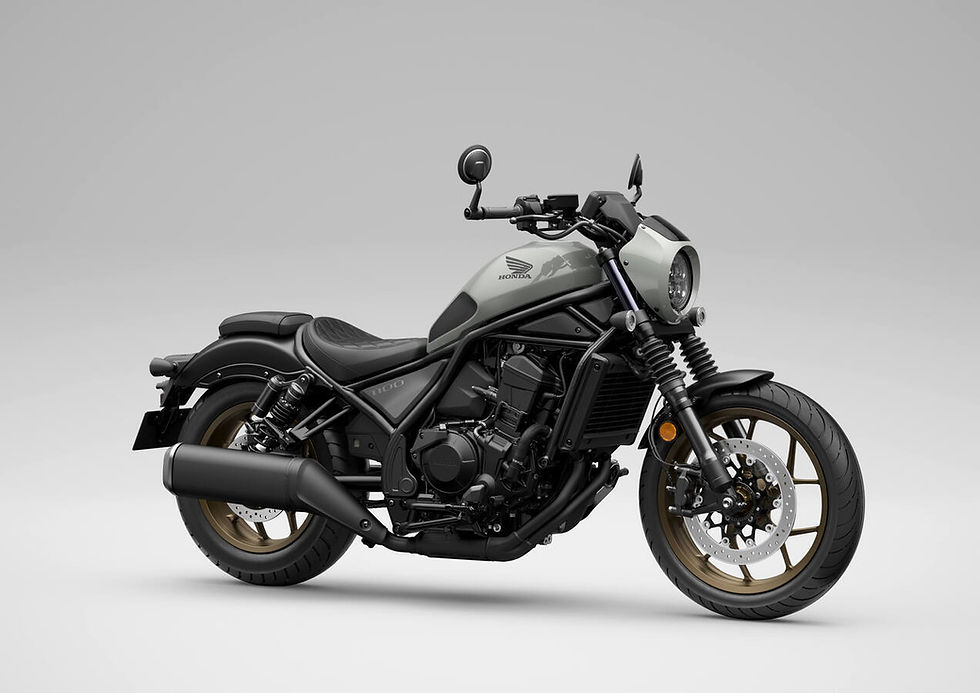
For 2027, Honda is keeping that formula intact and refreshing the colours across its Rebel range.
Before we get carried away, the engine, riding-position and electronics upgrades mentioned in Honda’s announcement were introduced for 2025. This latest update is about fresh paint rather than a mechanical overhaul. But there’s still plenty here worth a look if the big Rebel has slipped under your radar.
What’s New for 2027?
The standard CMX1100 Rebel gains Iridium Gray Metallic, alongside the returning Mat Ballistic Black Metallic.
The touring-focused CMX1100T Rebel gets a new Mat Beta Silver Metallic finish, while the CMX1100SE Rebel continues in Pearl Deep Mud Gray or Mat Ballistic Black Metallic.
Nothing revolutionary, then. But with a bike this stripped back, the colour does quite a lot of the talking.
An Africa Twin Engine in a Cruiser? Yes, Please.
At the heart of all three models is a 1,084cc parallel twin, derived from the Africa Twin but tailored to suit the Rebel’s character.
It produces 65kW — around 87bhp — and 98Nm of torque, with that peak torque arriving at 4,750rpm. The 270-degree crank, Rebel-specific valve timing and heavier flywheel are intended to give it a pronounced pulse and the sort of delivery you want from a cruiser.
For me, that’s the interesting bit. The Rebel looks ready for a gentle Sunday potter, but the engine specification suggests there’s enough in reserve when the road gets more entertaining.
You don’t have to spend every ride chasing the redline. Equally, buying a cruiser shouldn’t mean giving up on having a bit of fun.
Low Seat, Modern Equipment
The Rebel’s 710mm seat height remains one of its biggest attractions. Getting your feet confidently on the ground matters, particularly if you’re moving up to a bigger bike.
The riding-position changes introduced for 2025 brought the handlebars closer and higher, moved the footpegs forward and added a thicker, slightly wider seat.
That low seat doesn’t make the weight disappear, though. The standard manual Rebel weighs 226kg, rising to 236kg with DCT. It’s worth sitting on one and checking how it feels to manoeuvre, rather than judging accessibility from a seat-height figure alone.
Equipment includes a five-inch colour TFT, Honda RoadSync smartphone connectivity, a conveniently positioned USB-C socket and standard cruise control.
There are also Standard, Sport and Rain riding modes, plus two customisable User modes, adjustable traction control and integrated wheelie control. Quite a lot going on beneath that minimalist exterior.
Manual or DCT?
The standard Rebel and touring model offer a choice of six-speed manual transmission or Honda’s Dual Clutch Transmission. The SE is listed in DCT form.
DCT takes care of the clutch and can change gear automatically, or let you choose shifts using the handlebar controls.
Honda says 57% of Rebel 1100 owners have chosen DCT since the model’s introduction, so it clearly appeals to this audience. The 2025 refinements focused on smoother pullaways and better control at very low speeds, including tight turns.
I can see the appeal on a cruiser. If the aim is to relax and enjoy the ride, letting the bike handle the gear changes makes sense. Personally, I’d still want to try both before deciding.
Which Rebel Would I Pick?
The standard CMX1100 is the cleanest-looking option and the obvious starting point if you want to personalise it.
The CMX1100T adds a fork-mounted half-fairing, a short screen and hard panniers offering 35 litres of combined storage. That makes it the most practical choice for weekends away, although weight rises to 250kg with DCT.
Then there’s the CMX1100SE, which would get my attention first. Bar-end mirrors, a colour-matched headlight cowl, fork gaiters, a shorter front mudguard, a diamond-stitched seat and an anodised radiator cover give it a more finished custom look straight from the showroom.
My Take
The 2027 Rebel update is a modest one, but the bike underneath still makes a compelling case on paper.
I like the idea of a cruiser that combines low-slung styling with a lively engine, useful technology and a choice of transmissions. The SE has the strongest visual appeal for me, while the T makes sense if you want to take that laid-back approach a bit further afield.
Honda’s supplied release doesn’t confirm UK pricing or showroom arrival dates, so those details are still to come.
Which would you choose: the stripped-back standard Rebel, the touring T or the factory-custom SE? And would you go manual or DCT?


Comments